ESSAY
What the Surface Remembers
A photograph carries two records: the image the photographer made, and everything time has done to it since. Patricia von Ah on the photographs that do not stop recording.
Patricia von Ah
Founder, SEETHINK Lab & Zero Baseline of Photography
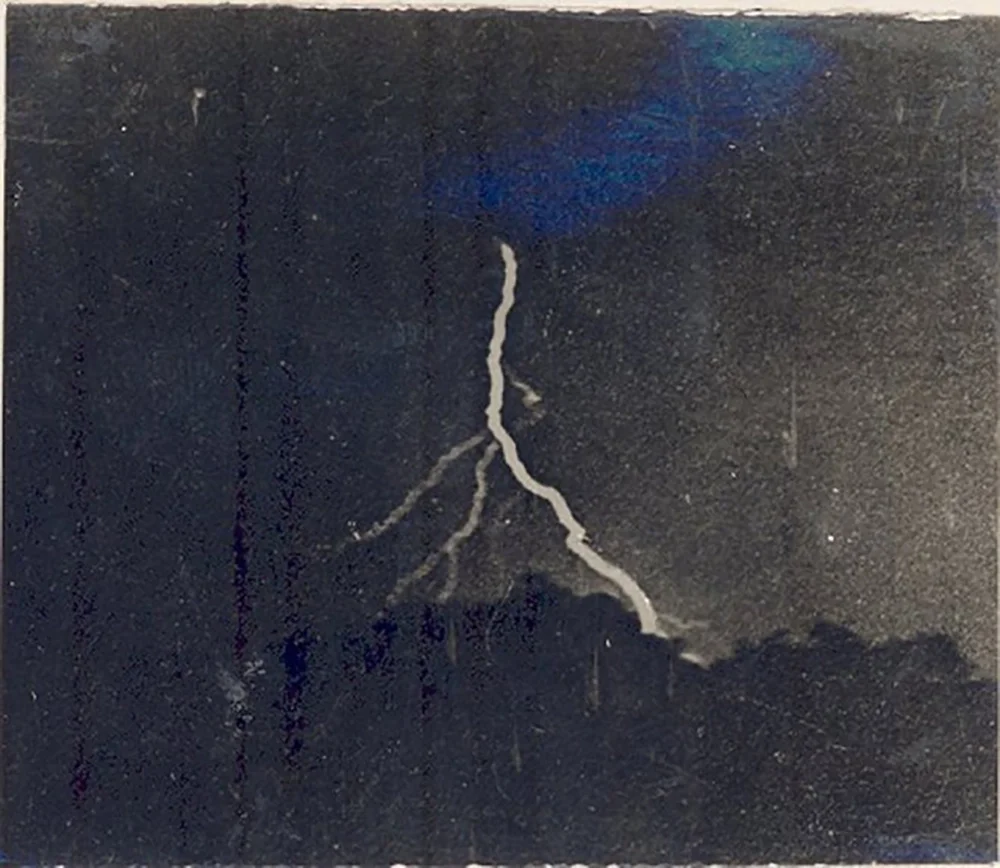
1882, Lightning by William Nicholas Jennings. Zero Baseline of Photography
What the surface carries
Pick up a glass plate negative from the 1890s. Hold it carefully, by the edges. The image is there but it is not the only thing you see. The emulsion has shifted. There are marks where fingers touched it decades ago. A fine web of cracks runs across one corner where the glass was stressed by temperature change. Along one edge, the silver has begun to bloom, producing a faint iridescence that was never part of the original exposure.
The photographer who made this plate saw none of this. They saw the image. They saw the tonal range they had worked to achieve, the sharpness, the composition. What I see, holding this plate now, is the image and everything that has happened to it since.
The second exposure
A photograph does not stop changing when it leaves the darkroom. The chemistry that was arrested in the fixing bath continues, slowly, over years. Silver tarnishes. Paper yellows. Albumen prints crack into fine patterns that look like dried riverbeds. Gelatin absorbs moisture and contracts. The dyes in colour prints shift — reds fade first, leaving the world tinted blue and green.
These are records. Every chemical shift, every scratch, every water stain is evidence of where the photograph has been and what it has endured. The surface carries a second history, written in a language the maker never intended and could not have predicted.
Over time, the silver of a daguerreotype tarnishes and a blue-gold halo creeps in from the edges. Conservators call this deterioration. I am not sure it is only that. The tarnish is a record of every condition the plate has passed through. It is information.
A print that has spent fifty years in a humid drawer looks different from one stored in archival conditions. Both contain the same image. They are not the same photograph. The surface has diverged. Time has made them into different objects with different things to say.
This is what I mean by the second exposure. The first was light. The second is time. Both leave marks. Both inform the observer.
More interesting, not more beautiful
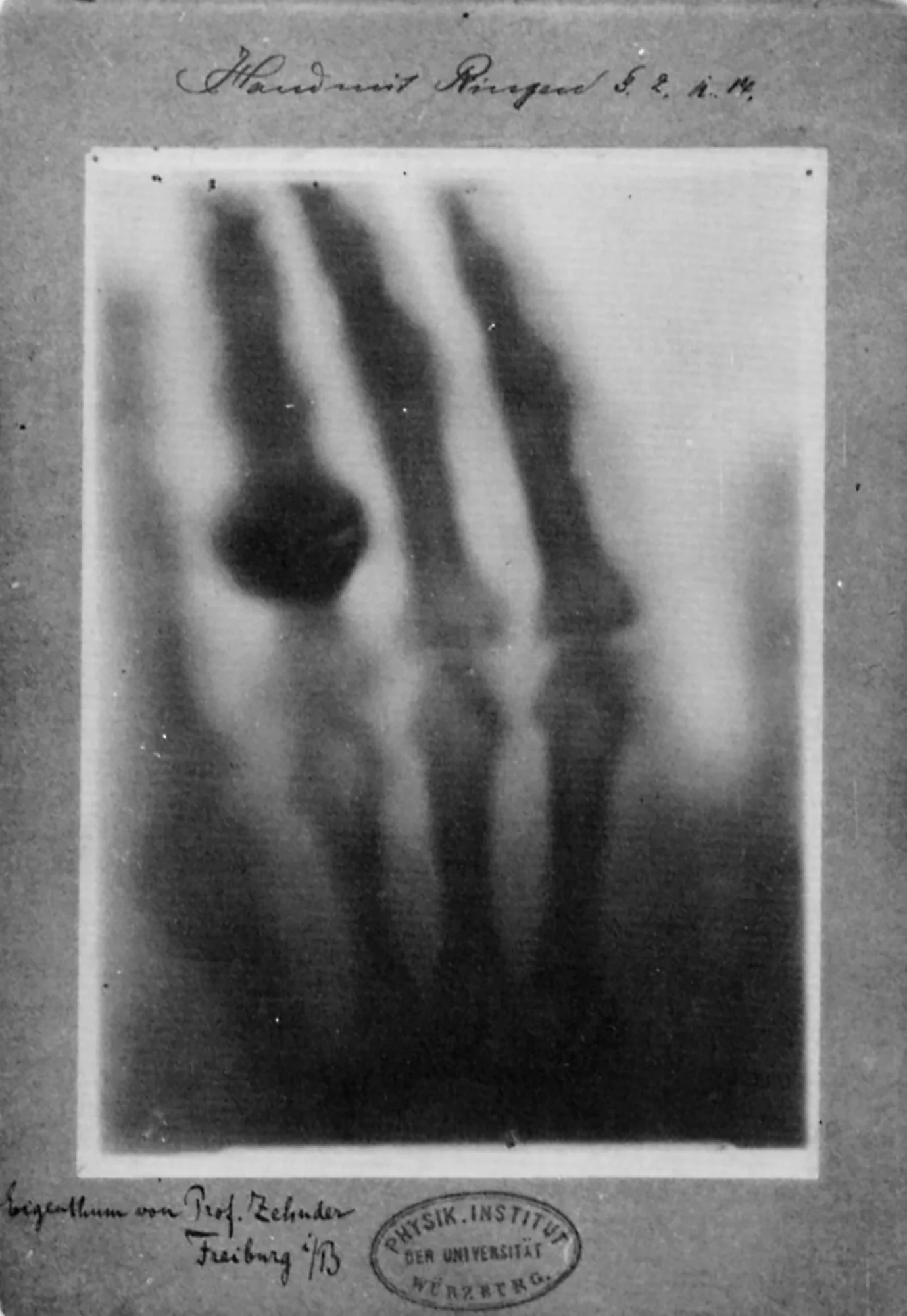
In the SEETHINK Lab research, we placed first photographs next to their contemporary equivalents. Röntgen’s 1895 X-ray of his wife’s hand beside a clinical X-ray from 2019. A wind tunnel study from around 1900 beside a contemporary fluid dynamics image. Skobeltzyn’s first cosmic ray photograph from 1927 beside a CERN bubble chamber image from 1973.
The contemporary images were sharper. More detailed. Technically superior. Participants acknowledged this. Then, consistently, they said the first photographs were more interesting.
Not more beautiful. More interesting. There is a difference. The older photographs carried something the modern ones did not. Part of it was the knowledge of what they were, first records, historical evidence, images that changed what was known. But part of it was the surface itself. The grain, the imperfection, the visible chemistry. The sense that the object in front of you had been through something.
A contemporary artist once told me that the most striking photographs were never meant to be beautiful. They were there to record something. That is exactly why they stay with you. Their power comes from their purposelessness as art. I think their power also comes from what time has added. Patina becomes testimony.
The surface is not separate from the meaning. It is part of how the image reaches us across time.
What the maker never saw
Röntgen saw the bones of his wife’s hand. A sharp, clean image of bones visible through flesh. The plate was new. The emulsion was fresh. The surface had no history yet.
What we see now, more than a century later, is different. The tonal range has shifted. The edges have degraded. The surface carries the marks of every hand that touched it, every case it was stored in, every change in temperature and humidity it survived. The image is still there. But it is embedded in a physical history that has become part of how it speaks to us now.
The photograph is not a fixed record. It is a living surface that continues to absorb and display and evolve long after the moment of capture. The glass plate, the paper negative, the physical print, each one goes on recording in some form or another.
The observer sees what the maker never could: the image and everything time has done to it since.
Patricia von Ah – Founder, SEETHINK Lab
Resources:
1882, Lightning by William Nicholas Jennings
1895, First X-ray of his wife’s hand by Wilhelm Conrad Röntgen
Visit Zero Baseline of Photography
Image credit: 1882, Lightning by William Nicholas Jennings, Zero Baseline of Photography. 1895, First X-ray of his wife’s hand by Wilhelm Conrad Röntgen, Zero Baseline of Photography.
© 2026 Patricia von Ah – SEETHINK Lab. All rights reserved.