ESSAY
The Elephant in the Room
A medieval illustration of an elephant. Detailed, confident, and wrong. Patricia von Ah on the moment a room full of children discovers that photography had to be invented.
Patricia von Ah
Founder, SEETHINK Lab & Zero Baseline of Photography
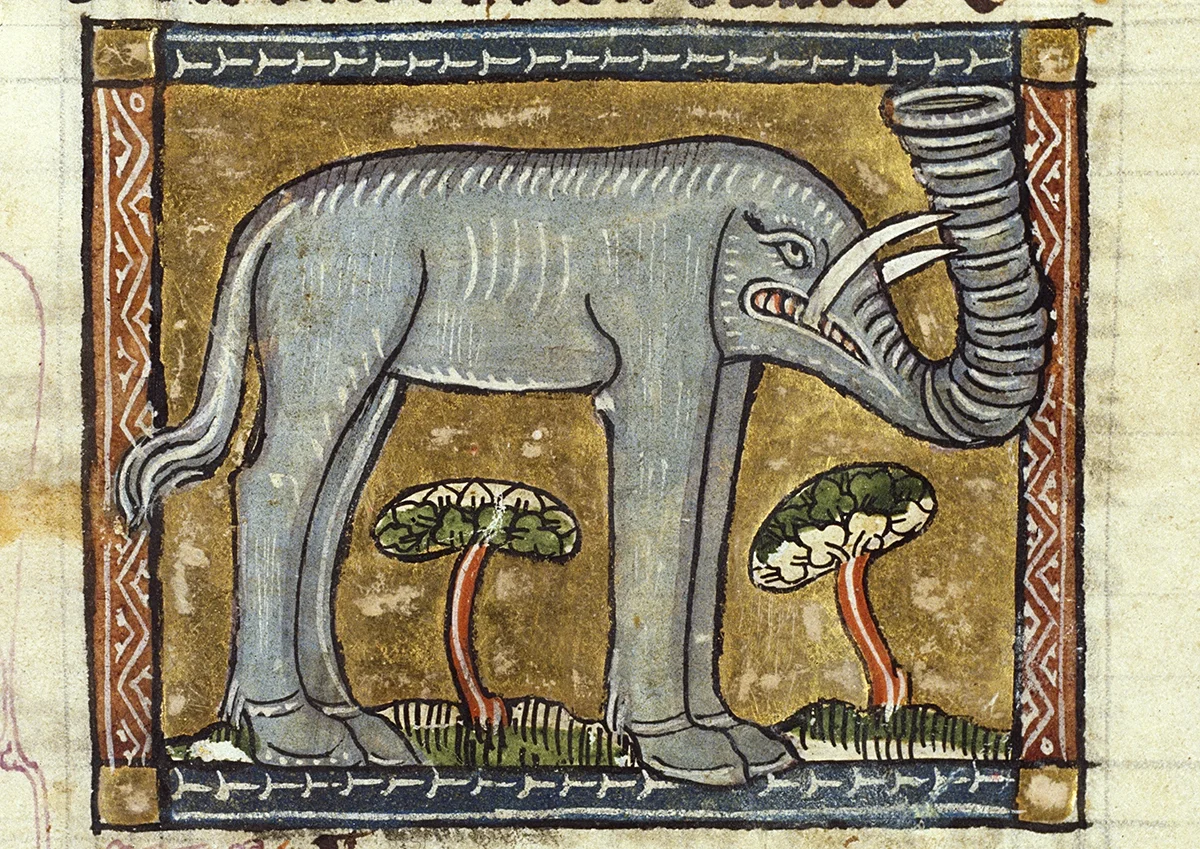
Der naturen bloeme by Jacob van Maerlant. Title: Elephas (Elephant), Source: Der naturen bloeme by Jacob van Maerlant, Archive: Koninklijke Bibliotheek, KA 16, fol. 54r, Date: c. 1350, Rights: Public domain, via Wikimedia Commons
What is this?
I show them an illustration. It is old, detailed, and confident. It shows a creature with large ears, a long nose, and a body that carries the weight of authority. Every line says: this is what this animal looks like.
I ask the children: what is this? What could this be?
They lean toward elephant. The ears are right. The trunk is there, approximately. Something about the overall shape is familiar enough.
I ask who has seen an elephant, and where. Very few have seen one in the wild. Some have seen one in a zoo. Most have seen one in a picture, a book, or on a screen. For most of the children in the room, what an elephant looks like is something they know from a photograph. They have never questioned whether the image is accurate. Why would they? A photograph shows what is there.
I tell them there was a time before photographs existed. In that time, if you wanted to know what an elephant looked like, you had two options: someone told you, or someone drew it for you.
The room goes quiet. Then someone says it. No photography???
The disbelief is real. The idea that there was no way to verify what a distant creature looked like, that you simply had to trust whoever described it or drew it, is almost incomprehensible to them. They have grown up with photographic evidence everywhere.
The illustrator who was not there
The illustration I showed the children is from a medieval manuscript. The artist who made it had almost certainly never seen an elephant. They were working from a description, possibly a description of a description, filtered through language, memory, and imagination. The result is a good effort, but incorrect.
This was not an exception. It was the standard. Medieval European bestiaries are full of elephants that look like horses, crocodiles that look like dogs, and whales that look like islands. The artists were often highly skilled. What they lacked was not ability but access.
When Matthew Paris drew Henry III’s elephant in 1255, one of the first European depictions made from direct observation, the difference was immediate. Wrinkled trunk. Jointed legs. Toenails. Accuracy required presence. Without it, the illustrator was guessing, however skilled.
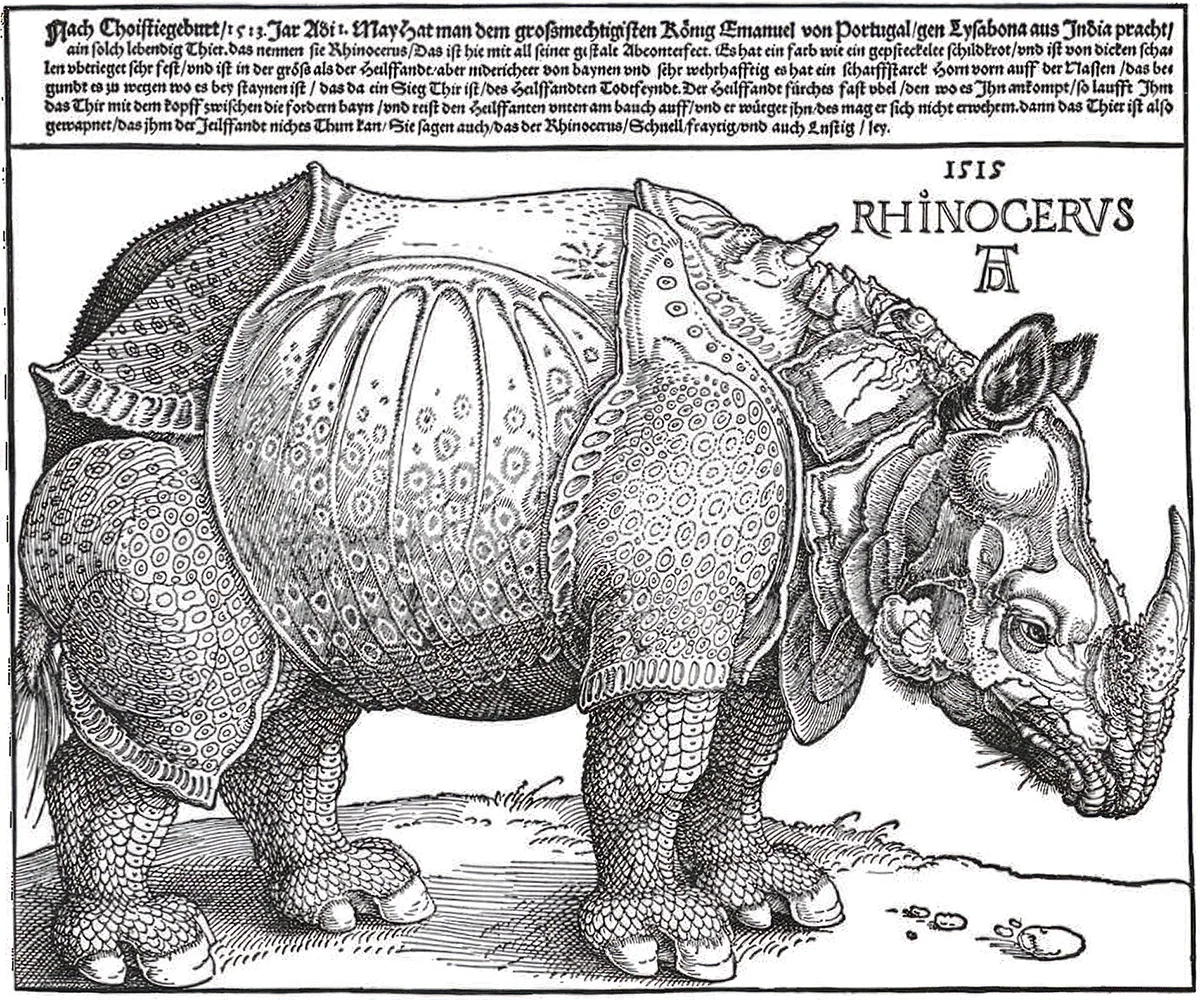
Then there is Dürer. In 1515, a rhinoceros arrived in Lisbon. Dürer never saw it. He worked from a written description and a rough sketch sent by a correspondent. His woodcut shows the animal in armour: rivets, scales, a twisted horn on its back. It is wrong in nearly every detail. It is also one of the most influential animal images ever made. For three centuries, this was what Europeans believed a rhinoceros looked like. Not because Dürer lacked talent. But he had not been there, and his authority carried the error further than accuracy might have carried the truth.
The pattern holds across every field where the hand was the only recording instrument. The hand that had not seen the subject could produce something beautiful. It could not produce evidence.
What the camera settled
The photograph changed this. A record that no longer depended on the maker’s ability to render what they saw. It showed what was in front of the lens. Still dependent on framing, angle, and the decisions of the person behind the camera. But no longer dependent on interpretation.
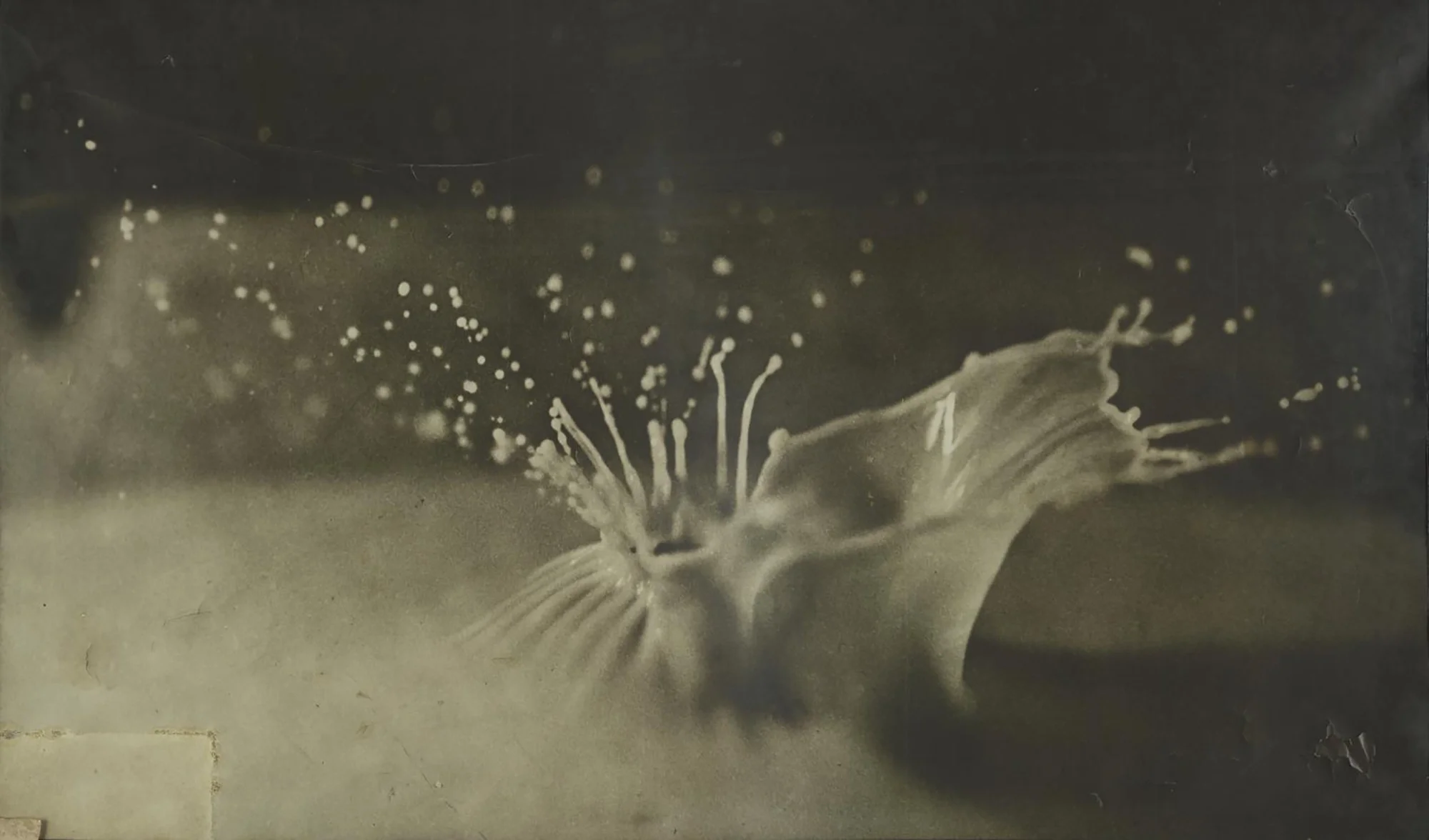
A. M. Worthington spent years studying liquid splashes. Before using photography, he observed them under short-duration electric sparks in darkness, then drew what he remembered seeing. His illustrations were careful, precise, and perfectly symmetrical. He was a trained observer, methodical and patient. He believed his drawings were accurate.
When he finally photographed the same splashes, the results were nothing like his drawings. The actual splashes were asymmetric, irregular, chaotic. The truth was messier and more complex than what his eye and hand had produced.
Worthington recognised what had happened. The mind of the observer, he wrote, becomes filled with an ideal form. Even watching the same event over and over, the eye systematically tidied what it saw. The camera did not tidy. It recorded. And the difference between the two was the distance between what we believe we see and what is actually there.
The elephant in the room
The children in the classroom understand something important. There was a time before photography when the only way to know what an elephant looked like was to trust someone who claimed to have seen one. And to hope they were telling the truth.
The elephant in the room is the one that was always there, standing behind every illustration, every description, every image that claims to show you what something looks like.
Photography did not answer every question. But it settled this one. The record no longer depends on whether the maker was present. It depends on whether they were present and pressed the shutter. That is where interpretation ends and evidence begins.
Patricia von Ah – Founder, SEETHINK Lab
Resources:
A.M. Worthington - Liquid dynamics frozen through early spark photography
Visit Zero Baseline of Photography
Image credits: Jacob van Maerlant, Public domain, via Wikimedia Commons. Albrecht Dürer, Public domain, via Wikimedia Commons. A.M. Worthington-Splash, Zero Baseline of Photography.
© 2026 Patricia von Ah – SEETHINK Lab. All rights reserved.